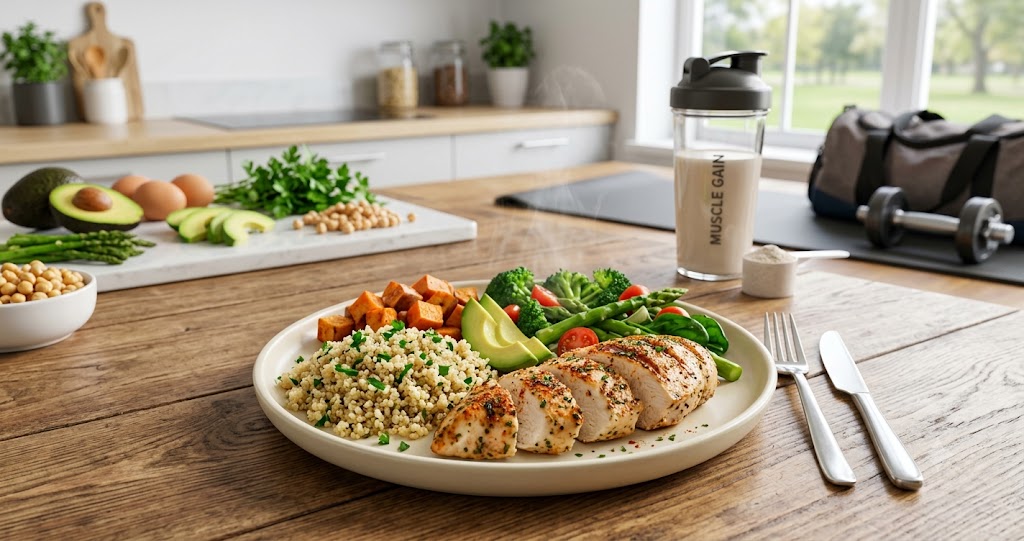
High protein meals for muscle gain provide the essential amino acids your body needs to repair and build muscle tissue after exercise. Combining quality protein sources with healthy carbohydrates and fats can maximize muscle growth, improve recovery, and support long-term fitness goals.
Key Takeaways
- Protein is essential for muscle growth and recovery.
- Include protein in every meal throughout the day.
- Combine protein with complex carbohydrates for better results.
- Focus on whole-food protein sources whenever possible.
- Meal timing can support recovery after workouts.
- Stay consistent with both nutrition and strength training.
- Aim for balanced meals rather than protein alone.
- Proper hydration also supports muscle development.
Why Protein Matters for Muscle Gain
Muscle growth occurs when your body repairs microscopic muscle damage caused by resistance training. Protein provides amino acids, which act as the building blocks needed for this repair process.
Without adequate protein intake, your body may struggle to recover efficiently and build new muscle tissue.
Benefits of high-protein meals include:
- Improved muscle recovery
- Increased muscle protein synthesis
- Better workout performance
- Enhanced satiety
- Support for lean body composition
Expert Insight: Consistently meeting your daily protein needs is often more important than relying on occasional high-protein meals.
How Much Protein Do You Need?
Protein requirements vary based on activity level, body weight, and fitness goals.
General Protein Recommendations
| Activity Level | Protein Intake |
| Sedentary Adults | 0.8 g per kg body weight |
| Recreational Exercisers | 1.2–1.6 g per kg |
| Muscle Gain Focus | 1.6–2.2 g per kg |
| Competitive Athletes | Up to 2.2 g per kg |
For example, a person weighing 70 kg may benefit from approximately 112–154 grams of protein daily when focusing on muscle gain.
Key Components of High Protein Meals for Muscle Gain
A muscle-building meal should include more than protein alone.
Ideal Muscle-Building Plate
| Nutrient | Purpose | Examples |
| Protein | Muscle repair and growth | Chicken, eggs, fish |
| Complex Carbs | Workout fuel | Brown rice, oats |
| Healthy Fats | Hormone support | Avocado, nuts |
| Vegetables | Micronutrients and fiber | Broccoli, spinach |
Pro Tip: Pairing protein with carbohydrates after training may support muscle recovery and glycogen replenishment.
Best High Protein Foods for Muscle Growth
Animal-Based Protein Sources
- Chicken breast
- Turkey
- Lean beef
- Eggs
- Fish
- Greek yogurt
- Cottage cheese
Plant-Based Protein Sources
- Lentils
- Chickpeas
- Tofu
- Tempeh
- Edamame
- Quinoa
- Black beans
Including a variety of protein sources helps provide a broad range of nutrients.
7 High Protein Meals for Muscle Gain
1. Chicken, Rice, and Vegetables
A classic muscle-building meal that combines lean protein with complex carbohydrates.
Protein: Approximately 40–45 grams
2. Greek Yogurt Power Bowl
Mix Greek yogurt with berries, oats, and almonds.
Protein: Approximately 25–30 grams
3. Salmon with Sweet Potato
Salmon provides protein and omega-3 fatty acids that support recovery.
Protein: Approximately 35–40 grams
4. Egg and Vegetable Omelet
Combine whole eggs with egg whites and vegetables.
Protein: Approximately 30 grams
5. Lean Beef Stir-Fry
Lean beef paired with vegetables and brown rice creates a nutrient-dense meal.
Protein: Approximately 35–45 grams
6. Tofu and Quinoa Bowl
A plant-based option rich in protein and essential nutrients.
Protein: Approximately 25–30 grams
7. Protein Smoothie
Blend:
- Whey protein
- Banana
- Oats
- Milk
- Peanut butter
Protein: Approximately 30–40 grams
Expert Insight: Smoothies can be especially useful when appetite is low after intense workouts.
Meal Timing for Better Muscle Growth
While total daily protein intake remains most important, meal timing can provide additional benefits.
Effective Protein Timing Strategy
- Breakfast: 25–35 grams
- Lunch: 25–40 grams
- Post-workout meal: 25–40 grams
- Dinner: 25–40 grams
- Optional evening snack: 20–30 grams
When deploying this approach, spread protein evenly across meals instead of consuming most of it at dinner.
Common Muscle Gain Nutrition Mistakes
Not Eating Enough Calories
A common bottleneck is focusing solely on protein while neglecting overall calorie intake.
Skipping Recovery Meals
Post-workout nutrition helps support muscle repair.
Relying Entirely on Supplements
Protein powders are convenient, but whole foods should remain the foundation of your diet.
Ignoring Hydration
Water plays a critical role in nutrient transport and exercise performance.
[Internal Link: Complete Muscle Building Nutrition Guide]
[Internal Link: Best Strength Training Workouts for Beginners]
[External Link: Academy of Nutrition and Dietetics Sports Nutrition Resources]
[External Link: National Institutes of Health Nutrition Information]
Frequently Asked Questions
1. What are the best high protein meals for muscle gain?
Meals containing lean protein, complex carbohydrates, and healthy fats such as chicken with rice, salmon with sweet potatoes, and Greek yogurt bowls are excellent choices.
2. How much protein should I eat daily for muscle gain?
Most active individuals aiming for muscle growth benefit from approximately 1.6–2.2 grams of protein per kilogram of body weight.
3. Is protein timing important for building muscle?
Total daily protein intake is most important, but spreading protein across meals may help optimize muscle protein synthesis.
4. Can plant-based diets support muscle gain?
Yes. Foods such as tofu, lentils, tempeh, beans, and quinoa can provide sufficient protein when consumed strategically.
5. Are protein shakes necessary for muscle growth?
No. Protein shakes are convenient but not required. Whole-food protein sources can effectively support muscle gain.
Build More Muscle with Smarter Nutrition
High protein meals for muscle gain provide the fuel your body needs to recover, grow stronger, and achieve better training results. The key is consistency, balanced nutrition, and a well-structured fitness plan.
Start Building Muscle Today
Choose one high-protein meal from this guide and add it to your weekly meal plan. Small improvements in nutrition can lead to significant gains in strength, recovery, and muscle development over time.