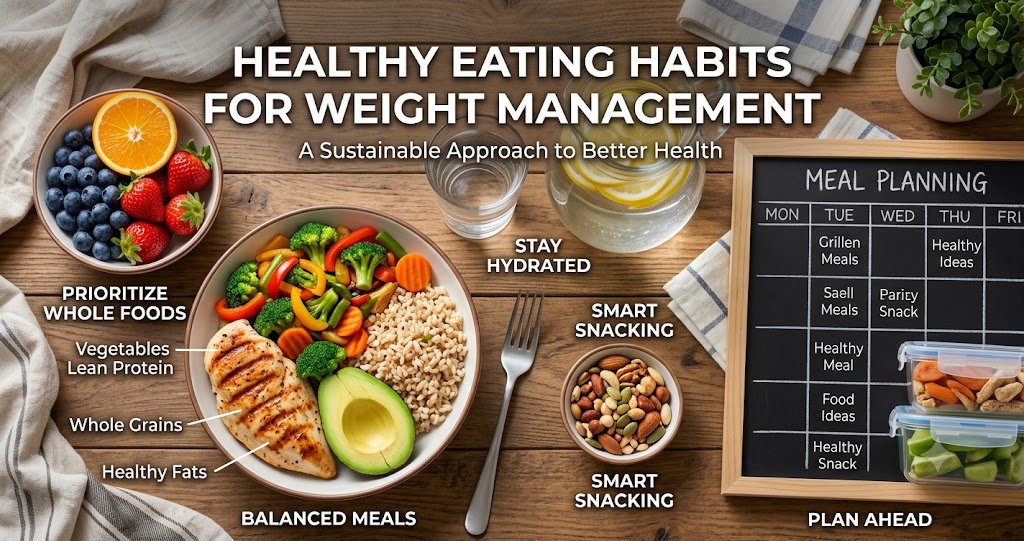
Healthy eating habits for weight management are not about strict dieting or eliminating your favorite foods. Instead, they focus on creating a balanced lifestyle that helps you maintain a healthy weight while improving overall well-being. By adopting simple and sustainable eating habits, you can achieve long-term results without feeling deprived.
Quick Answer: Healthy eating habits for weight management include eating balanced meals, controlling portion sizes, choosing nutrient-dense foods, staying hydrated, and maintaining consistency. These habits support steady weight control while improving energy levels and overall health.
Key Takeaways
- Focus on whole, nutrient-rich foods.
- Eat balanced meals with protein, healthy fats, and fiber.
- Practice portion control.
- Stay hydrated throughout the day.
- Limit processed and sugary foods.
- Plan meals in advance.
- Develop consistent eating patterns.
- Prioritize long-term habits over quick fixes.
Why Healthy Eating Habits Matter for Weight Management
Weight management is influenced by the balance between calories consumed and calories burned. However, not all calories are equal when it comes to satiety, nutrition, and long-term health.
Healthy eating habits help you:
- Control hunger naturally
- Reduce unnecessary snacking
- Improve metabolism
- Maintain stable energy levels
- Support muscle retention during weight loss
- Improve overall physical and mental health
Expert Insight: People who focus on building healthy eating habits are more likely to maintain weight loss than those who rely on restrictive diets.
The Foundation of Healthy Eating Habits
1. Prioritize Whole Foods
Whole foods are minimally processed and packed with nutrients.
Examples include:
- Fruits
- Vegetables
- Whole grains
- Lean proteins
- Nuts and seeds
- Legumes
These foods provide vitamins, minerals, and fiber while helping you feel fuller for longer.
2. Build Balanced Meals
A balanced plate helps regulate appetite and prevents overeating.
| Food Group | Recommended Portion | Benefits |
| Vegetables | 50% of plate | Fiber and nutrients |
| Lean Protein | 25% of plate | Muscle support and satiety |
| Whole Grains | 25% of plate | Sustainable energy |
| Healthy Fats | Small serving | Hormone and brain health |
Pro Tip: Include protein in every meal to reduce cravings and improve fullness.
Portion Control: The Secret to Sustainable Weight Management
Even healthy foods can contribute to weight gain if consumed in large quantities.
Try these portion-control strategies:
- Use smaller plates and bowls.
- Eat slowly and mindfully.
- Avoid eating directly from packages.
- Pay attention to hunger and fullness cues.
- Serve portions before sitting down to eat.
Common Portion Mistakes
| Habit | Better Alternative |
| Eating while watching TV | Focus on meals without distractions |
| Large restaurant portions | Share meals or save leftovers |
| Mindless snacking | Pre-portion snacks |
Stay Hydrated Throughout the Day
Many people mistake thirst for hunger.
Benefits of proper hydration include:
- Better appetite regulation
- Improved digestion
- Increased energy
- Enhanced physical performance
Aim for adequate water intake daily, adjusting based on activity levels and climate.
Expert Insight: Drinking water before meals may help reduce overall calorie intake.
Smart Snacking for Weight Management
Snacks can either support or sabotage your goals.
Choose nutrient-dense options such as:
- Greek yogurt
- Fresh fruit
- Nuts
- Boiled eggs
- Vegetable sticks with hummus
Avoid snacks high in added sugars and refined carbohydrates, which can lead to energy crashes and increased hunger.
Create a Consistent Eating Schedule
Skipping meals often leads to excessive hunger and overeating later.
Healthy eating habits for weight management include:
- Eating breakfast if it suits your schedule
- Maintaining regular meal times
- Avoiding long periods without food
- Planning meals ahead of time
Consistency helps regulate hunger hormones and supports better food choices.
Mindful Eating: An Overlooked Weight Management Tool
Mindful eating involves paying attention to what, when, and why you eat.
Practice mindful eating by:
- Eating without distractions
- Chewing slowly
- Savoring flavors and textures
- Recognizing emotional eating triggers
Pro Tip: Before eating, ask yourself whether you’re physically hungry or simply bored, stressed, or emotional.
Foods That Support Healthy Weight Management
Best Choices
- Leafy greens
- Berries
- Oats
- Brown rice
- Chicken breast
- Fish
- Beans
- Lentils
- Avocados
- Nuts
Foods to Limit
- Sugary beverages
- Processed snacks
- Fast food
- Refined grains
- Excess sweets
Limiting these foods doesn’t mean eliminating them entirely. Moderation is often more sustainable than restriction.
Common Weight Management Challenges
Emotional Eating
Stress and emotions can trigger overeating.
Solutions:
- Identify triggers
- Practice stress management
- Keep healthy snacks available
Busy Schedules
Meal planning and preparation can reduce reliance on convenience foods.
Social Events
Focus on portion control and balance rather than perfection.
[Internal Link: Healthy Meal Planning Guide]
[Internal Link: Beginner’s Nutrition Tips]
[External Link: World Health Organization Nutrition Resources]
[External Link: Harvard T.H. Chan School of Public Health Nutrition Information]
Frequently Asked Questions
1. What are the best healthy eating habits for weight management?
The most effective habits include eating balanced meals, controlling portions, staying hydrated, and choosing whole foods over processed options.
2. How often should I eat for weight management?
Meal frequency varies by individual. Consistency and overall calorie balance matter more than the number of meals.
3. Can I lose weight without giving up my favorite foods?
Yes. Moderation allows you to enjoy favorite foods while maintaining healthy eating habits.
4. Does drinking water help with weight management?
Yes. Proper hydration supports appetite control, digestion, and overall health.
5. How long does it take to see results from healthy eating habits?
Results vary, but consistent healthy eating habits often lead to noticeable improvements in energy, health, and weight over several weeks to months.
Healthy eating habits for weight management are not about perfection—they’re about consistency. Small, sustainable changes often produce better long-term results than extreme diets. Focus on building habits that fit your lifestyle, prioritize nutrient-rich foods, and stay patient with the process.
Ready to Take Control of Your Health?
Start by choosing one healthy eating habit today—whether it’s drinking more water, adding vegetables to meals, or practicing portion control. Small daily improvements can lead to significant long-term success in weight management and overall wellness.