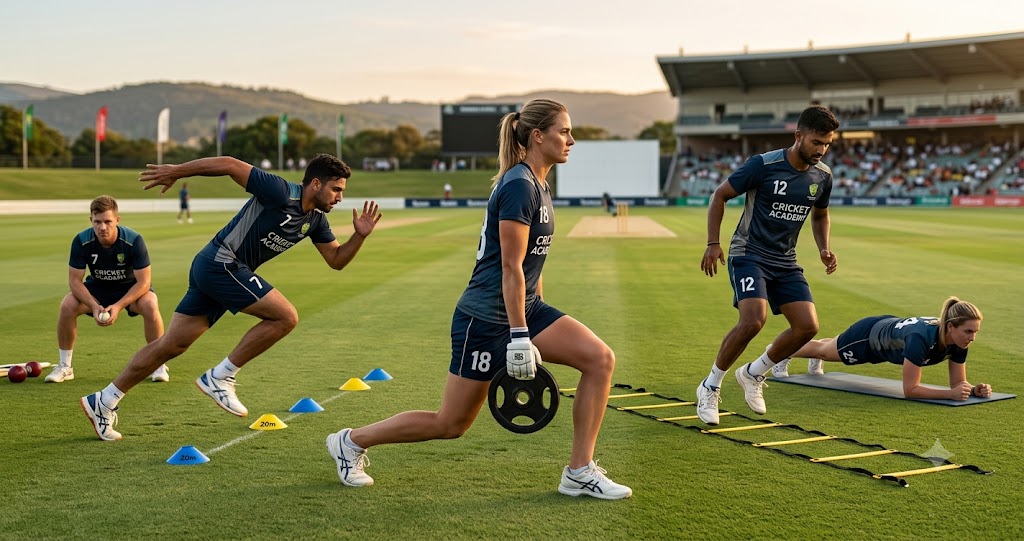
Cricket fitness exercises for better performance help players improve strength, speed, agility, endurance, and injury prevention. Whether you’re a batsman, bowler, wicketkeeper, or all-rounder, a structured fitness routine can enhance on-field performance and help you stay competitive throughout the season.
Key Takeaways
- Cricket requires a combination of strength, speed, agility, and endurance.
- Fitness training improves batting, bowling, fielding, and recovery.
- Focus on lower-body strength and core stability.
- Include sprint training for explosive movement.
- Agility drills enhance fielding performance.
- Proper recovery reduces injury risk.
- Consistency matters more than occasional intense workouts.
- Position-specific training can maximize results.
Why Fitness Matters in Cricket
Modern cricket is more physically demanding than ever. Players are expected to sprint between wickets, dive in the field, bowl long spells, and maintain concentration for extended periods.
A strong fitness foundation helps players:
- Generate more power while batting
- Increase bowling efficiency
- Improve fielding speed and reaction time
- Reduce fatigue during matches
- Lower injury risk
Expert Insight: Technical skills win moments, but fitness often determines whether a player can consistently perform throughout an entire match or tournament.
Key Fitness Components for Cricket Players
A successful cricket fitness program should develop multiple physical qualities.
| Fitness Component | Why It Matters |
| Strength | Power for batting and bowling |
| Speed | Faster running between wickets |
| Agility | Quick directional changes |
| Endurance | Sustained performance |
| Mobility | Improved movement quality |
| Core Stability | Better balance and power transfer |
Focusing on all these areas creates a well-rounded athlete.
Squats for Lower-Body Strength
Squats are among the most effective cricket fitness exercises for better performance.
Benefits
- Improves leg power
- Supports faster sprinting
- Enhances balance and stability
- Builds strength for explosive movements
Recommended Routine
- 3–4 sets
- 8–12 repetitions
Pro Tip: Prioritize proper technique before increasing weight.
Sprint Training for Speed
Cricket players frequently perform short bursts of high-intensity running.
Sample Sprint Workout
| Sprint Distance | Repetitions |
| 20 meters | 6 |
| 30 meters | 4 |
| 40 meters | 4 |
Rest adequately between sprints to maintain maximum effort.
Benefits
- Faster running between wickets
- Improved acceleration
- Enhanced fielding performance
Expert Insight: Short-distance sprinting closely replicates the movement demands experienced during cricket matches.
Planks and Core Training
A strong core supports almost every movement in cricket.
Effective Core Exercises
- Front plank
- Side plank
- Russian twists
- Dead bugs
- Bird dogs
Core strength contributes to:
- Better batting balance
- More efficient bowling action
- Improved posture
A common bottleneck is focusing only on visible abdominal muscles instead of overall core stability.
Agility Ladder Drills
Fielders and wicketkeepers benefit significantly from agility training.
Agility Benefits
- Faster footwork
- Better reaction time
- Improved coordination
- Enhanced movement efficiency
Spend 10–15 minutes performing ladder drills before training sessions.
Pro Tip: Focus on speed while maintaining control and proper foot placement.
Lunges for Functional Strength
Lunges mimic many cricket-specific movements.
Types of Lunges
- Forward lunges
- Reverse lunges
- Walking lunges
- Lateral lunges
Benefits
| Exercise | Primary Benefit |
| Forward Lunge | Lower-body strength |
| Reverse Lunge | Balance and control |
| Lateral Lunge | Side-to-side movement |
These exercises help improve stability and reduce injury risk.
Shuttle Runs for Match Fitness
Cricket requires repeated short bursts of activity rather than continuous running.
Sample Shuttle Drill
- Sprint 10 meters and return.
- Sprint 20 meters and return.
- Sprint 30 meters and return.
Repeat 4–6 rounds.
This drill develops:
- Endurance
- Acceleration
- Recovery ability
Expert Insight: Shuttle runs closely simulate the stop-and-start nature of cricket.
Mobility and Flexibility Training
Many players overlook mobility until injuries occur.
Important areas include:
- Hips
- Hamstrings
- Shoulders
- Ankles
- Thoracic spine
Daily stretching and mobility exercises help improve movement quality and recovery.
Sample Weekly Cricket Fitness Plan
| Day | Focus |
| Monday | Strength Training |
| Tuesday | Sprint and Agility Work |
| Wednesday | Recovery and Mobility |
| Thursday | Strength and Core |
| Friday | Shuttle Runs and Conditioning |
| Saturday | Cricket Skills Practice |
| Sunday | Active Recovery |
When deploying this plan, adjust training volume based on age, fitness level, and match schedule.
Common Cricket Fitness Mistakes
Ignoring Recovery
Recovery is essential for long-term performance and injury prevention.
Training Only Skills
Technical practice is important, but fitness training enhances the ability to execute skills effectively.
Neglecting Mobility
Limited flexibility can restrict movement and increase injury risk.
Inconsistent Training
Fitness gains come from regular practice rather than occasional intense sessions.
[Internal Link: Complete Cricket Training Guide]
[Internal Link: Best Strength Exercises for Athletes]
[External Link: International Cricket Council Fitness Resources]
[External Link: Sports Medicine and Athlete Conditioning Resources]
Frequently Asked Questions
1. What are the best cricket fitness exercises for better performance?
Squats, sprint training, lunges, planks, shuttle runs, agility drills, and mobility exercises are among the most effective options.
2. How often should cricket players train?
Most players benefit from 3–5 structured fitness sessions per week, depending on their competition schedule.
3. Is strength training important for cricket?
Yes. Strength training improves power, stability, speed, and injury prevention.
4. How can bowlers improve fitness?
Bowlers should focus on lower-body strength, core stability, endurance, and shoulder mobility.
5. Can fitness improve batting performance?
Yes. Better fitness can enhance balance, reaction time, power generation, and concentration during long innings.
Elevate Your Cricket Performance Through Fitness
Cricket fitness exercises for better performance help players build the strength, speed, endurance, and agility needed to excel on the field. A well-rounded fitness routine can improve every aspect of your game while reducing injury risk.
Start Training Smarter Today
Choose two or three exercises from this guide and add them to your weekly routine. Consistent fitness training can help you perform better, recover faster, and gain a competitive edge in every match.