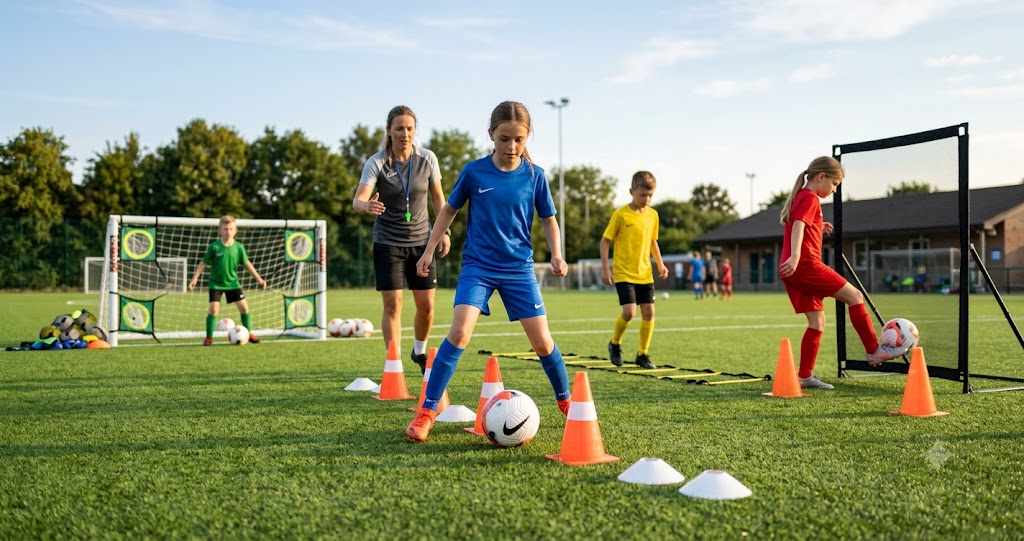
Football training drills for beginners are designed to help new players develop essential skills such as dribbling, passing, shooting, ball control, and fitness. By focusing on simple, structured exercises, beginners can improve quickly, gain confidence, and build a strong foundation for long-term success in football.
Key Takeaways
- Master basic football skills before learning advanced tactics.
- Practice dribbling, passing, and shooting regularly.
- Include agility and fitness drills in your routine.
- Focus on technique rather than speed at the beginning.
- Train both feet to become a more complete player.
- Consistency is the key to improvement.
- Small-sided games help apply skills in real match situations.
- Proper warm-ups reduce injury risk and improve performance.
Why Football Training Is Important for Beginners
Football is a skill-based sport that requires coordination, balance, speed, and decision-making. Beginners often want immediate results, but success comes from mastering the fundamentals.
Benefits of regular football training include:
- Improved ball control
- Better passing accuracy
- Increased confidence
- Enhanced fitness levels
- Faster skill development
Expert Insight: The world’s best footballers spent years perfecting simple drills before becoming elite players.
Essential Skills Every Beginner Should Learn
Before focusing on advanced techniques, beginners should develop core football abilities.
| Skill | Importance |
| Dribbling | Maintains possession of the ball |
| Passing | Builds team play |
| Shooting | Creates goal-scoring opportunities |
| Ball Control | Improves first touch |
| Agility | Helps with quick movements |
| Endurance | Supports full-match performance |
Building these skills early makes future training more effective.
Cone Dribbling Drill
Dribbling is one of the most important football skills.
How to Perform
- Place 5–10 cones in a straight line.
- Dribble the ball through the cones.
- Use both feet.
- Keep the ball close to your body.
Benefits
- Improves control
- Enhances coordination
- Develops confidence
Pro Tip: Look up occasionally while dribbling to improve awareness of your surroundings.
Wall Passing Drill
Passing accuracy improves through repetition.
How to Perform
- Stand several feet from a wall.
- Pass the ball against the wall.
- Control the return pass.
- Repeat using both feet.
Benefits
- Better passing technique
- Improved first touch
- Stronger weaker foot
| Training Time | Recommended Passes |
| 10 Minutes | 75–100 Passes |
A common bottleneck is only practicing with the dominant foot.
Shooting Accuracy Drill
Scoring goals requires proper shooting technique.
Setup
- Place markers in goal corners.
- Shoot from different angles.
- Focus on placement before power.
Benefits
- Improved accuracy
- Better confidence
- Enhanced finishing skills
Expert Insight: Consistent accuracy training produces better results than simply kicking the ball as hard as possible.
First Touch Control Drill
Ball control determines how effectively a player can receive and move the ball.
How to Perform
- Toss the ball into the air.
- Control it using your foot, thigh, or chest.
- Bring the ball to the ground smoothly.
Benefits
- Improved touch
- Better game awareness
- Increased confidence under pressure
Practice for 10–15 minutes daily for noticeable improvement.
Agility Ladder Drill
Football players constantly change direction during matches.
Benefits
- Faster footwork
- Better balance
- Increased coordination
Sample Routine
| Drill | Duration |
| High Knees | 30 Seconds |
| Side Steps | 30 Seconds |
| Quick Feet | 30 Seconds |
Pro Tip: Focus on clean foot placement before increasing speed.
Shuttle Runs for Match Fitness
Football requires repeated bursts of speed.
How to Perform
- Sprint 10 meters and return.
- Sprint 20 meters and return.
- Sprint 30 meters and return.
Repeat for 4–6 rounds.
Benefits
- Improved stamina
- Faster acceleration
- Better recovery between sprints
This closely mimics the movement patterns seen during real matches.
Small-Sided Games
One of the most effective football training drills for beginners is participating in small-sided games.
Benefits
- More touches on the ball
- Faster decision-making
- Better teamwork
- Improved confidence
Games such as 3v3 or 5v5 create more opportunities to practice skills than full-sized matches.
Expert Insight: Small-sided games accelerate learning because players are constantly involved in the action.
Sample Weekly Beginner Training Plan
| Day | Training Focus |
| Monday | Dribbling and Ball Control |
| Tuesday | Passing Practice |
| Wednesday | Agility and Fitness |
| Thursday | Shooting Drills |
| Friday | Combined Skills Training |
| Saturday | Small-Sided Matches |
| Sunday | Recovery and Stretching |
When deploying this routine, adjust intensity according to your age, fitness level, and experience.
Common Football Training Mistakes
Skipping Warm-Ups
Always perform dynamic stretches before training.
Training Only One Skill
Balanced development leads to faster improvement.
Ignoring Fitness
Even skilled players struggle without proper endurance.
Practicing Inconsistently
Regular training sessions produce better results than occasional long workouts.
[Internal Link: Complete Beginner Football Skills Guide]
[Internal Link: Best Fitness Workouts for Football Players]
[External Link: FIFA Grassroots Football Development Program]
[External Link: Sports Performance Training Resources]
Frequently Asked Questions
1. What are the best football training drills for beginners?
Cone dribbling, wall passing, shooting drills, ball control exercises, agility ladders, shuttle runs, and small-sided games are excellent choices.
2. How often should beginners practice football?
Most beginners benefit from training 3–5 times per week while allowing time for recovery.
3. How can I improve my dribbling skills?
Practice cone drills regularly, use both feet, and focus on keeping the ball close while moving.
4. Are fitness drills important for football beginners?
Yes. Fitness drills improve endurance, speed, agility, and overall match performance.
5. How long should a football training session last?
A beginner session typically lasts between 45 and 90 minutes, depending on fitness level and training goals.
Take Your Football Skills to the Next Level
Football training drills for beginners provide the foundation needed to become a confident and effective player. By focusing on the basics and practicing consistently, you can improve your skills, fitness, and overall performance on the field.
Start Training Today
Choose three drills from this guide and add them to your next training session. Small improvements each week can lead to major progress over time and help you enjoy the game even more.