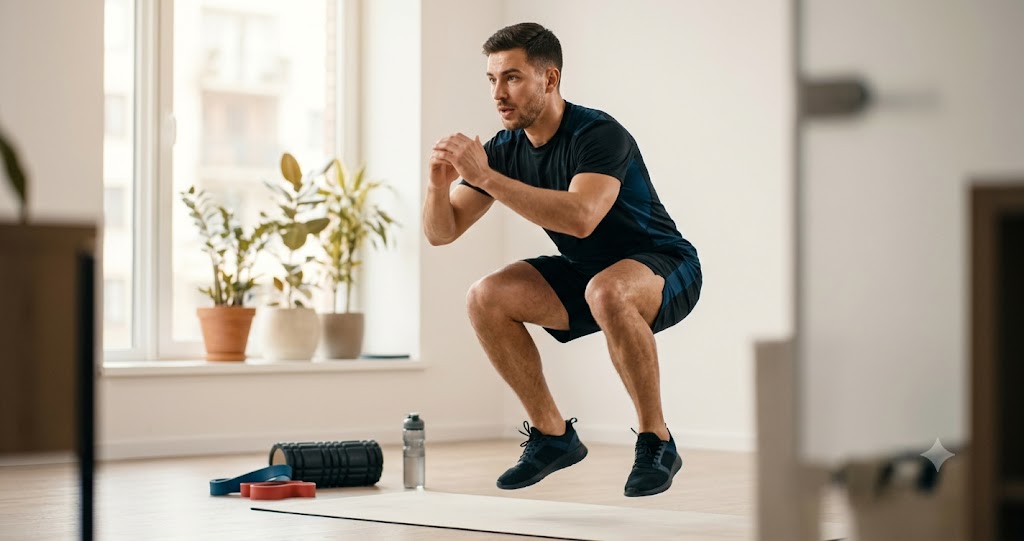
Home workout routines for athletes can help maintain strength, speed, endurance, and mobility without requiring expensive equipment. With the right combination of bodyweight exercises, conditioning drills, and recovery practices, athletes can continue improving performance from the comfort of their homes.
Why Home Workouts Are Important for Athletes
Many athletes assume that peak performance requires a fully equipped gym. While gym training offers advantages, home workouts can be equally effective when structured properly.
Benefits of home workout routines for athletes include:
- Greater flexibility and convenience
- Reduced training costs
- Improved consistency
- Better recovery management
- Ability to train during travel or off-seasons
Whether you’re a football player, runner, cricketer, basketball athlete, or fitness enthusiast, a well-designed home workout can support your performance goals.
Key Components of an Effective Home Workout
Athletic performance depends on multiple fitness qualities. A balanced routine should focus on:
Strength
Strength improves power production, injury resistance, and overall performance.
Speed and Agility
Quick movement patterns help athletes react faster during competition.
Endurance
Cardiovascular fitness supports sustained performance throughout training and games.
Mobility
Good mobility improves movement efficiency and reduces injury risk.
Pro Tip: The most effective athletes train movement patterns, not just muscles.
Essential Bodyweight Exercises for Athletes
Bodyweight training forms the foundation of many successful home workout programs.
| Exercise | Primary Benefit |
| Push-Ups | Upper-body strength |
| Squats | Lower-body power |
| Lunges | Balance and stability |
| Planks | Core strength |
| Burpees | Conditioning |
| Mountain Climbers | Agility and endurance |
These exercises require little space and no specialized equipment.
Sample Home Workout Routine
Warm-Up (5–10 Minutes)
Prepare your body before training.
- Jumping jacks – 2 minutes
- Arm circles – 30 seconds
- Leg swings – 30 seconds
- High knees – 1 minute
- Dynamic stretches – 3 minutes
A proper warm-up improves performance and reduces injury risk.
Strength Circuit
Perform three rounds:
| Exercise | Reps |
| Push-Ups | 15 |
| Bodyweight Squats | 20 |
| Walking Lunges | 12 per leg |
| Plank | 45 seconds |
| Glute Bridges | 20 |
Rest for 60 seconds between rounds.
Expert Insight: When deploying home strength training, focus on perfect form before increasing repetitions.
Speed and Agility Training
Athletes need explosive movement, even when training at home.
Agility Circuit
- High knees – 30 seconds
- Lateral shuffles – 30 seconds
- Skater jumps – 20 reps
- Quick feet drill – 30 seconds
Repeat for 3 rounds.
Benefits include:
- Faster acceleration
- Improved coordination
- Better reaction time
A common bottleneck is sacrificing technique for speed. Prioritize control first.
Conditioning Workout for Endurance
Athletes must maintain cardiovascular fitness year-round.
15-Minute Conditioning Circuit
Perform continuously:
- Burpees – 10 reps
- Mountain climbers – 30 seconds
- Jump squats – 15 reps
- Plank shoulder taps – 20 reps
Repeat as many rounds as possible in 15 minutes.
This workout improves stamina while also building muscular endurance.
Recovery and Mobility Training
Recovery is often overlooked but plays a major role in athletic development.
Essential Recovery Exercises
- Hip flexor stretch
- Hamstring stretch
- Cat-cow mobility drill
- Child’s pose
- Thoracic spine rotations
Spend at least 10 minutes after each workout improving mobility.
Pro Tip: Better mobility often leads to improved athletic performance and fewer injuries.
Weekly Home Workout Schedule
| Day | Focus |
| Monday | Strength Training |
| Tuesday | Speed & Agility |
| Wednesday | Recovery & Mobility |
| Thursday | Strength Training |
| Friday | Conditioning |
| Saturday | Sport-Specific Drills |
| Sunday | Active Recovery |
This balanced schedule allows adequate recovery while supporting performance gains.
Common Home Workout Mistakes
Skipping Warm-Ups
Starting intense exercise without preparation increases injury risk.
Ignoring Recovery
Progress happens during recovery, not just training.
Training Without Structure
Random workouts often produce inconsistent results.
Poor Exercise Technique
Quality movement should always come before intensity.
Nutrition Tips for Athletic Performance
Training and nutrition work together.
Focus on:
- Lean protein sources
- Complex carbohydrates
- Healthy fats
- Proper hydration
- Post-workout recovery meals
Athletes who combine effective training with proper nutrition typically see better results.
Frequently Asked Questions
1. Are home workout routines effective for athletes?
Yes. Well-structured home workouts can improve strength, endurance, mobility, and conditioning without requiring gym equipment.
2. How often should athletes train at home?
Most athletes benefit from 4–6 training sessions per week, depending on their sport and recovery needs.
3. Can bodyweight exercises build athletic strength?
Absolutely. Exercises like push-ups, squats, lunges, and planks help develop functional strength and stability.
4. What equipment is useful for home athletic training?
Resistance bands, jump ropes, kettlebells, and agility ladders can enhance home workouts but are not required.
5. How long should a home workout last?
Most effective sessions range between 30 and 60 minutes, depending on the training objective.
Start Building Athletic Performance at Home
Home workout routines for athletes offer a practical and effective way to stay strong, fit, and competition-ready. By combining strength training, agility drills, conditioning, and recovery work, you can continue progressing regardless of your access to a gym.
Take action today by choosing one workout from this guide and adding it to your weekly routine. Consistent effort, smart programming, and proper recovery will help you unlock your athletic potential.